


Long ago, when the name of Pendar still carried weight in the far west of Cornwall, there stood a farm called Baranhual. Its fields looked towards rough ground, green lanes, and the broken places where the land falls towards the sea. The Pendars were said to be fading, though they still had cattle in the byres, crops in the fields, and pride enough to think their fortune would last forever. Among all their beasts, one cow was finer than the rest. She was a red cow, deep coloured as rowan berries, and they called her Rosy. No cow in Buryan could match her. In spring she gave milk enough for two. In summer she gave more. In autumn, when other cows failed, Rosy still filled the pails. Even in winter, when cattle grew sharp boned and hollow eyed, she kept her shine, her strength, and her generous flow. Yet Rosy had one strange habit. Each morning she gave her milk willingly. But every evening, when the richest milk still remained, she would lift her ears, stop chewing, and give a soft lowing cry, as though calling to a calf beyond mortal sight. Then the milk would stop. No coaxing brought it back. If the milkmaid tried again, Rosy would kick the bucket aside and race to the far end of the field. Dame Pendar did not like this. She was hard of temper and saw mystery only as profit withheld. One evening she took the pail herself. Rosy stood sweetly enough at first, and the milk came warm and white. Then came the lowing cry. “There is more in you yet,” said Dame Pendar. She set her hands to the cow again, rougher than before. Rosy kicked the pail to splinters, tossed Dame Pendar over her back, and thundered across the field. After that, some said Rosy was bewitched. Some said she should be sold. Yet no force could drive her from Baranhual. She broke through every gathering of men and boys, and always returned to the same fields, as if the land itself had called her back. In time, Rosy had a heifer calf. The calf drank well, yet Rosy still filled the bucket, and the farm prospered while she remained. The fields yielded. The cattle fattened. The barns filled. For a while, it seemed the fortune of the Pendars had been mended by one red cow. Then came Midsummer. The milkmaid had gone to the games near Penberth and returned late, with stars showing over the dark land. Rosy was waiting in the field. The maid sat beneath her and milked until the pail was almost full. Then Rosy stopped, lifted her head, and gave her gentle cry. The maid knew better than to force her. She plucked a handful of grass to steady the pail on her head. In that grass was a four leaved clover, though she did not know it. When she turned back, she saw them. All around Rosy stood the Small People. There were hundreds of them. Some sat upon her back. Some climbed about her neck and shoulders. Others gathered beneath her udder with buttercups, folded leaves, and tiny vessels made from flowers. Rosy’s hidden milk was falling for them. They drank from blossoms and little cups. They stroked her red coat, scratched behind her horns, cleared burrs from her hide, and brought small herbs for Rosy and her calf. The maid understood then. Rosy had not been stubborn. She had been keeping faith. The milk had never belonged wholly to Baranhual. It was shared with the unseen folk of the land, and in return they had brought health, luck, and plenty to the farm. Then Dame Pendar’s voice cut across the field. “What keeps you so long with that cow?” At once the Small People turned. Their bright faces hardened. Their fingers pointed towards the hedge where Dame Pendar stood. Then Rosy tossed her head, the calf leapt beside her, and cow, calf, and company vanished into the dark. The maid ran home and told all she had seen. Dame Pendar cared only for the secret. She found the four leaved clover in the maid’s hat and questioned her closely. Mr Pendar was troubled. “Leave them be,” he said. “Old people always said the Small People bring luck when they are not crossed. We have prospered while they had their share.” But greed had taken root in Dame Pendar. The next morning she went to a red haired woman from Penberth or Treen, one some called wise and others called worse. The woman told her that the Small People could not endure salt, nor anything of the sea. So Dame Pendar came home and scattered salt over Rosy’s coat, washed her udder with brine, and cast salt across the fields and yard. That evening she took two buckets, expecting both to be filled. Rosy gave a little milk, then stopped. Dame Pendar grew angry, struck her, and spoke to her as though she were nothing but a thing made for use. Rosy kicked the pail to pieces, threw Dame Pendar sprawling, and galloped across Baranhual, bellowing like a wounded creature. From that day, she gave them not one drop of milk. Rosy and her heifer wandered the farm by day and night. No hedge held them. No gate stopped them. Their cries were heard from lonely fields, rough cliffs, and dangerous hollows. Before Christmas, both had grown lean, and all the cattle of Baranhual began to fail. Charmers, pellars, white witches, and workers of old counter magic were called. They burned straw and blood, carried fire through the folds, and drove the cattle through smoke and heat. None of it helped. The crops blighted. The beasts sickened. The luck of Baranhual ran out like water from a cracked pot. At last, Mr Pendar tried to sell Rosy and her heifer at Buryan fair. Men and boys drove them onto the churchtown road, but they could not bring them to fair, and they could not drive them home. At dusk, Mr Pendar saw them for the last time. Rosy and her heifer were racing over Sennen Green towards the sands of Gwynver, their red shapes moving against the dying light. Then they were gone. No one at Baranhual ever saw them again. Dame Pendar never recovered from the tossing Rosy gave her. The milkmaid lost her bloom within the year. As for the Pendars, their fortune waned from that time onward. Field by field, beast by beast, acre by acre, it slipped from their hands. And so the old people told the lesson of Rosy, the red cow of Baranhual. What is shared with the hidden world may return as blessing. What is seized in greed may turn to ruin. And there are some gifts that must never be salted, counted, or claimed as wholly your own.

Long ago, when Parcurnow was still a working harbour west of Hayle, and Treen was remembered as a market town, there lived at lonely Chyannor a poor labouring man named Tom. He had a wife, whose name is lost, and a daughter called Patience. Tom worked where he could. In season he laboured on the farms. When there was no farm work, he streamed for tin upon the moors. But the tin was poor, and little came of all his labour. So one day he gathered what tin he had won and carried it to Treen market. There, upon the great holy stone where stream tin was poured into shallow hollows, he met merchants from Market Jew. They told him there was work to be had in the east, near Praze an Beeble. Tom went home and told his wife. “One must be a fool,” he said, “to starve here when work may be found a few days away.” His wife knew he had already chosen. She mended his clothes, baked for his road, and walked with him and Patience as far as the crossroads. There they parted with tears. Tom crossed the wild country eastward until he came at sunset to a farmhouse called Penthoga. The farmer and his wife welcomed him kindly, gave him ale and meat pie, and offered him work for two pounds a year. Tom stayed three years. Each year, when his wages were due, the farmer asked Tom to give them back in exchange for wisdom. Tom grumbled, but each time he agreed. The first wisdom was this: Never lodge in a house where an old man is married to a young woman. The second was this: Never leave an old road for a new one. The third was this: Never swear to anything seen through glass. And be thrashed twice before content once. Tom understood little of it, but he trusted his master. Before he left, the farmer’s wife gave him a small dark charm stone for Patience. “If ever her husband, or any other, contends with her,” she said, “let her put this in her mouth and keep her lips closed. It will save her much trouble.” Then Tom set out for home. On the road he met three Treen merchants and travelled with them to Market Jew. They wished to lodge at an inn, but Tom saw that the hostess was young and her husband old and feeble. Remembering his first wisdom, he slept next door instead. That night, through a hole in the partition, he saw the young hostess plot with a red haired lover to murder her husband and blame the three merchants. Tom cut a piece from the murderer’s coat as proof. By morning, the merchants had been condemned to hang. Tom came running into court, told what he had seen, and showed the torn cloth. The murderer was found, his coat matched the piece, and the merchants were saved. So the first wisdom had stood beside him. Later, at Trelew Hill, the merchants chose a new road. Tom kept to the old one. When the roads met again, he found the merchants robbed and half stripped. He led them back together, crying, “One and all,” and they overcame the robbers. So the second wisdom had stood beside him. At last, Tom reached Chyannor at dusk. Before entering, he looked through the little glass window and saw a man and woman sitting close by the fire. His heart darkened. He thought his wife had taken another man. Then he remembered: Never swear to anything seen through glass. He held his anger. A voice spoke behind him. It was his wife, coming up the path with fern on her back. “That is not me by the fire,” she said. “That is Patience with Jan the cobbler, her sweetheart.” So the third wisdom had saved his own house from bloodshed. Inside, Tom gave his wife the cake sent by the farmer. When she heard he had given back three years of wages for wisdom, she flew into anger and threw the cake at his head. It struck the wall and broke open. Out fell silver and gold. The farmer had hidden Tom’s wages inside, and more besides. Then Tom’s wife showed him one more wonder. While he had been away, she had borne him a son, a fine little boy nearly three years old. Tom’s joy was beyond words. In time, Patience married Jan. She wore the charm stone, and when anger rose between them, she put it in her mouth and kept peace until the storm had passed. Their home became steady and loving. Years later, Tom sighed that he would never own land. Then his wife opened an oak chest and poured gold onto the table. She had found it hidden in the lining of the robber captain’s coat Tom had taken on the road. There was enough to buy fields in St Levan and stock them well. So Tom of Chyannor became a rich yeoman, and his children prospered after him. He had paid six pounds for wisdom and thought himself robbed. Yet that wisdom saved innocent men, saved his friends, saved his household, and brought him home to fortune. For gold may be lost, stolen, hidden or spent. But true wisdom, dearly bought, may stand beside a man when all else fails.

Long ago, before the fields were divided as they are now, and before the old stones were given common names, Castle Treen was held by giants. They were not enemies of the people. In those early days, the giants protected Treen and the neighbouring places, and in return the people brought them cattle, milk, fish, hides, and whatever else such enormous guardians required. It was a hard bargain, but a useful one. In a wild country, where sea, storm, hunger, and hostile hands were never far away, a giant on the headland was no small comfort. Of all those who lived at Castle Treen, only three are clearly remembered: an ageing giant, his wife, and the child they stole and raised as their own. The old giant’s name has been lost. He was said to stand more than forty feet high without his boots, and to be strong enough to move the Logan Rock with one finger. His wife was nearly as large, but not nearly so gentle. They had no child. This grieved them both, and troubled the people too. If the giants died without an heir, who would guard Treen in the years to come? The old giant bore his sorrow calmly. He was a quiet soul, fond of sitting in his great stone chair, looking out towards the Logan Rock and the sea. But the giantess grew restless and sharp of temper. She called him lazy. She sent him swimming to the Dollar Rocks for conger, cod, and pollock. She made him move the Logan Rock for her amusement, and when he fell asleep before her hour glass ran out, she pelted him with stones. The poor giant would wake with a sore head and hear her bellow: “Stop thy snoring, old fool, and work.” The people of Treen gave advice, as people always do when the trouble belongs to someone else. Some said she needed labour. Some said company. Some said only a child would settle her. And there lay the heart of the matter. Then one day, a cunning man of Treen had an idea. Near Maen lived another giant, fierce and proud, with many children. He had often flung rocks towards Castle Treen. Why not steal one of his children and raise him as the heir of Treen? The old giant and his wife were delighted. To steal from Maen would be revenge. To gain a child would bring comfort. To raise a young giant at Castle Treen would secure the future of the place. So they sent for a wise woman of Treen, said to be a witch who could take any shape she pleased. One afternoon she set out. Near Maen, she hid among the rocks until she saw a giant child playing with ordinary children. He was only four years old, but already as large as a grown man, still wearing his little frock and bib like a baby who had outgrown the cradle too quickly. The witch shook a string of bright buttons in the light. “Kiss me, dear,” she said, “and I will give thee all these.” The child came gladly. She tempted him with buttons, shells, limpets, and toys. When he tired, she changed herself into a horse and carried him on her back. By evening she had brought him into Castle Treen. The giantess received him with open arms. The old giant loved him at once. The people brought milk and food. The child was praised, petted, and admired. Those were the happy years. At sunrise in summer, the old giant carried him to Castle Peak and showed him the headlands, coves, far places, and shining sea. “Look well, my boy,” he would say. “From the Lizard to the land beneath the setting sun, no giant has a finer home than Castle Treen. All this shall be thine when I am dead and gone.” He taught the boy to swim the rocks, gather eggs, fish with bone and shell hooks, and move through the sea like a creature born of tide and stone. What little the old giant knew, he gave gladly. The boy grew quickly. Before many years had passed, he was nearly as large as the old giant himself. He called the old one Dadda, and for a while there was joy at Castle Treen. But fair weather does not always hold. As the boy grew, the giantess changed. What had seemed motherly became darker. She neglected her husband, saved the best food for the young giant, and left the old one to dive for his own fish and sometimes eat seaweed when hunger pressed him hard. Worse than hunger were her words. She mocked his age and praised the youth before him, saying the young giant could move the Logan Rock better from the grass than the old one had ever done in his strength. The old giant was slow to jealousy, but the people of Treen saw more than he did. They told him what passed between his wife and the foster son in the sunny hollows among the rocks. Grief entered his heart. He became watchful and surly, and the pair found little comfort unless he had gone from the castle to fetch food. One winter day, before setting out for provisions, the old giant told them one of them must meet him on his return and help carry what he brought home. They promised. Then they forgot him. At last they heard his footsteps on Pedn y vounder cliff. He was coming back angry, roaring above the breakers, with an ox across his shoulders and a sheep hanging from each arm. The giantess was frightened, but not helpless. She knew the narrow path he must take into the castle’s inner ground. So she placed herself on the rocks above the Gap and waited. The old giant strode along the ledge, furious and burdened, seeing nothing but his own anger. As he passed beneath her, she struck him in the face with all her strength. The blow sent him, ox, sheep, and all, over the edge. Down he fell among the rocks below. At that moment, something broke inside the giantess. Perhaps she remembered the old days when she had loved him. Perhaps she feared what she had done. She stepped back onto a flat stone between high rocks and threw her apron over her head, so she would not hear his dying cries. But the old giant did not die at once. As he lay among the boulders, his skull broken, he called upon the powers he had served to avenge him. They answered. The giantess was changed into stone. There she remains. In his last moments, the old giant thought of the young one more with sorrow than anger. He could not hate the boy he had carried, taught, fed, and loved. What became of the young giant, no one knows. Some say he fled back towards Maen. Some say he wandered the western cliffs until the race of giants faded from the land. Only the stones remain. The giant’s chair. The rocks his wife threw. The Logan Rock he moved with finger or staff. The place where the giantess stood when judgement found her. And so the old people of Treen told the tale: Strength may guard a country, but it cannot guard a heart from loneliness. A stolen child may bring joy, but what is wrongly taken carries sorrow within it. And when trust is broken in a house of stone, even giants may fall.

Not so very long ago, as old tales reckon time, there lived near the foot of Carn Kenidjack a poor man named Tom Treva. His dwelling stood alone, with a few hard crofts about it, and in that small place he and his wife raised a large family. The boys, as they grew older, went to work in the mines and helped with the rough tillage when they could. The eldest daughter, Grace, stayed at home to assist her mother. Grace was a good girl, nearly sixteen, and handy in all the simple work of a poor household. She could cook, sweep, wash, spin, knit, and turn her hand to whatever was needed. But there was one thing she lacked. She had no proper clothes. Her best gowns were made from old dresses that had belonged to her grandmother. They were bright enough, with large flowers and colours that had once been fine, but they were old fashioned. The young women who worked at the mines and had wages of their own laughed at her for wearing them. They would not walk with her to preaching, nor take her with them to games, nor be seen beside her at feast time. Grace bore it for a while. She sang about her work like a lark, and in the evenings she listened to the old stories told by her father and the neighbours around the hearth. But year after year her mother and brothers promised that, when money could be spared, they would buy her a new rig out as smart as any maid in the parish. Year after year, there was no money to spare. Then at feast time, a cousin of Grace’s came home from service. She had been away only a year, but to Grace she looked almost like a lady. She wore a shining blue dress, earrings, bright beads of red, green, and yellow, and flowers in her bonnet that all the girls admired. “Cousin Grace,” she said, “I would take thee up to Church town to the fiddler on Monday night, if only I had brought a frock for thee to wear. But thy grandmother’s old gowns would make thee a laughing stock. Go into service, child. Get clothes fit to be seen in, and a sweetheart too, as other maidens do.” From that day, Grace grew restless. She saw her old gowns with new eyes. The house seemed smaller. The hills seemed lonelier. The tales that had once comforted her now felt like cobwebs holding her in place. At last her mother agreed that she might go into service after the summer came. Through the winter they spun and knitted as hard as they could, earning a few extra shillings so Grace might have proper underclothing before she set out. Her father was reluctant. He disliked sending any of his children away, and when the morning came, he warned her carefully. “Do not go farther than a day’s journey,” he said. “Keep away from Penzance and the towns. Strange sailors prowl there, and many a maid has been carried off and never seen again.” Grace promised. She took her bundle, kissed her family, wished them well, and walked away from Carn Kenidjack towards the southern parishes, where the richer farmers lived. At first her heart was steady. She thought of her cousin’s shining dress, her beads, her bonnet, and the fine world that might be waiting beyond the hills. But before long she turned aside to take one last look at Carn Kenidjack, where she had spent so many Sunday afternoons among the rocks, playing with other young people and listening to old stories. Then she climbed until she could only just see the smoke from the roofs below. Her courage failed. She sat on a roadside rock, covered her face with her apron, and wept aloud. She thought of her parents, her brothers and sisters, her old playmates, and the possibility that she might never see any of them again. While she was crying, she looked up and saw a gentleman standing close beside her. He was handsome, well dressed, and had a kindly way with him. “Good morrow,” he said. “Why dost thee weep, my maid?” “Oh, sir,” Grace answered, “I have left home and am on the road to a strange country, to seek service.” “Then good luck has brought me here,” said he. “I came this way to find a tidy girl to care for my house and my little son. I am a widower, and there is no one but an old great aunt to look after the boy. There is little to do, only the dairy work for one cow, a few poultry, and the care of the child. Come home with me, Grace. Try the place. If it does not suit thee, stay until another can be found.” Grace wondered how he knew her name. She wondered, too, how he had come so near without her seeing him on the open ground. But her mother had taught her not to ask questions too freely. The gentleman spoke kindly, and when he lifted her bundle as if it weighed nothing, she followed him. He told her his name was Robin, though some called him Bob o’ the Carn, or Bobby Carn. They walked downhill together, towards country Grace did not know. She kept her eyes mostly on him, for his voice was pleasant and his manner gentle. By the time she noticed the road again, they were in green lanes shaded by trees, with honeysuckle and strange sweet flowers hanging overhead. Grace had never seen such trees. She had never smelt such flowers. Robin smiled at her wonder. “These are little things,” he said. “Where I live, thou shalt see more.” They passed a great house, which Grace thought must be a king’s palace, and went on through shade and water, where clear streams crossed the path. Whenever the water ran across the road, Robin lifted her over so she did not wet even the edge of her shoe. He gave her cakes and cordials as they travelled, and the road seemed short. Near sunset, they came to a river beneath a towering carn of grey rock, standing among trees. Robin carried Grace over the stepping stones, then led her through an orchard heavy with red and yellow fruit. The boughs bent low, and the air smelt of apples, blossom, and things Grace had no names for. By a winding path, they came to a green surrounded by flowering trees. Without realising that she had left the garden, Grace stepped through what seemed an arbour and found herself inside Robin’s dwelling. The kitchen was bright. Pewter shone on the shelves like silver. A wood fire burned on the hearth, though it was high summer. Beside it sat a sharp faced old woman on a chimney stool, knitting. Robin said: “I am come, Aunt Prudence, with a tidy maid I had the good luck to meet on her way to service.” The old woman looked Grace over as though her eyes were awls. “I see thee art come, Robin,” she said. “And it seems to me thee hast brought home a young giglet who will use her tongue more than her hands. We shall see.” Then a little boy came running in. “Dadda!” he cried. Robin took him on his knee. He looked no more than six or seven in size, but his face had something old and cunning in it, and his eyes were sharp. “My little Bob,” said Robin, “here is a nurse for thee. She will give thee milk, wash thy face, and anoint thy eyes, as thy mother used to do.” “That I cannot tell yet,” said the boy, looking at Grace as closely as Aunt Prudence had done. Robin set bread, cheese, apples, honey, and other good things on the board. Grace had never tasted such white bread or such sweetness. After she had eaten, she rose to work, but Aunt Prudence told her to wait until milking time. When the hour came, Robin gave her a pail. “Go through the orchard into the meadow by the river,” he said. “Call ‘Pruit, Pruit,’ and the cow will come.” Grace did as he told her. From among the trees came a beautiful white cow. She stood with her udder over the bucket, and the milk fell in such a shower that the pail was full and running over in a minute. Grace rose to fetch another vessel, but as soon as she lifted the bucket, the cow lowed and vanished into the wood. When Grace told Robin, he laughed gently. “That pail will do for tonight. The cow’s name is Daisy. If ever thou wants more, take two or three pails with thee, for she will fill whatever is brought. But she will not wait while thee goes back.” Grace thought Daisy must be the finest cow in the world. That evening, Aunt Prudence gave her the rules of the house. She must put the boy to bed before dark. She must sleep in the same room. At sunrise she must take him to a spring, wash him well, and anoint his eyes with a tiny touch of green ointment from an ivory box. She must milk Daisy, feed the child only one bowlful, make breakfast, scald the milk, and clean the house. Then came the warning. “Do not go into the spare rooms. Do not meddle with what does not concern thee. Ask no questions except about thy work. Above all, never enter thy master’s private room. If thou dost, thou shalt rue the day as long as thou livest.” Grace listened and promised. For a while, all went well. Robin was kind. Daisy gave milk in abundance. The garden seemed like Paradise. The poultry followed Grace about the place. The flowers were unlike any that grew near Carn Kenidjack, and the fruit was so golden and fragrant that it hardly seemed meant for cooking. Robin praised Grace when she worked well. He showed her how to weed the flower beds and what to spare. When she pleased him, he kissed her, saying he knew no other way to show his satisfaction. Grace worked harder to earn such praise again. Days passed. Then months. Then years, though Grace scarcely knew it. Robin sometimes rode away in the mornings dressed like a gentleman going hunting. Grace polished his boots and buckled his silver spurs, taking pleasure in seeing him mount and ride into the wood. She wondered where the paths led, for whenever she walked that way, the lanes seemed to wind on forever. Robin told her never to leave the grounds during his absence. Above all, she was not to go near the high rock, for at its foot was a dark low hole where Bucca dhus came out and carried people away, never to be seen again. For a long time, Grace obeyed. Then, one afternoon, Robin was away and the boy was at school. Grace felt lonely. The hens and pigeons followed her, but they were poor company for a heart that had begun to grow restless. She went to the outer gate. Beyond it was a pleasant walk by the waterside, green and shaded. She opened the gate and stepped through. She followed the path until she came near the high rocks. She thought she heard the sea murmuring somewhere beyond them. Then a voice called: “Stop there, my pretty maid. I will come down and give thee a diamond ring.” Grace looked up. On the topmost stone stood a dark man dressed like a sailor. He beckoned for her to go farther along the path. Fear seized her. She ran back through the gate, with the hens screaming after her. Their noise set the dogs barking, and the dogs brought Aunt Prudence hurrying over. The old woman scolded Grace soundly, saying she had nearly been carried away through her own gadding. When Robin came home, Grace confessed her fault with tears. “I will let it pass,” he said, “as it is thy first disobedience.” He gave her cordial, and that night she slept deeply and dreamt sweetly. After that, Grace often waited up for Robin, though Aunt Prudence told her not to. She liked to pull off his boots and make him supper. Robin seemed pleased, and Grace cared more for his pleasure than for Prudence’s warnings. Yet one forbidden thing gnawed at her thoughts. The locked parlour. What could be inside it? Why was she forbidden to enter? What rooms lay beyond? The more she told herself not to think of it, the more the thought returned. One afternoon, Aunt Prudence was cleaning the private room and left the door ajar. She did not know Grace was near. Grace peeped in. She saw rare and curious things, more than she could take in. There were objects that looked like conjuring tools. There were heads and shoulders without arms. There were whole small bodies, white and naked, set upon shelves and in cupboards, looking to Grace like people turned to stone by enchantment. She trembled and began to back away. But Aunt Prudence came behind her, struck her, and cried: “Now, thou perverse girl, since thou hast entered the forbidden room, thou shalt work in it for punishment.” She pointed to a long dark chest standing on a frame, like a coffin upon a table. “Rub that till thou canst see thy nose in it.” Grace cried, but she rubbed as she was told. She worked so hard that she shifted the thing from its frame, and from within it came a low, sorrowful sound like a dying groan. Thinking some spirit or enchanted body was imprisoned inside, Grace fell down in a fit. Robin soon knew something had gone wrong in his private room. When Grace came round, he was stern. “This is thy second disobedience,” he said. “For the third, there is no forgiveness. If thou cannot check thy curiosity, thou must find another place.” For many days he did not sing to her, nor play with her, nor show his old warmth. Grace grieved and tried all the harder to please him. In time, he forgave her, and kissed her again. But the forbidden room had only deepened the mystery. Grace began to think about the boy’s sharp eyes, and the ointment she placed in them each morning. Perhaps, she thought, the ointment let him see things hidden from her. So one morning, when Robin had ridden away, she took the ivory box and rubbed some of the green ointment into her own eyes. At once they burned. They smarted so fiercely that she thought they would turn inside out. She ran to the pool and washed them. As the pain eased, she looked into the water. There, deep below the surface, was another world. She saw trees, birds, and little people in great numbers. Some were so small they perched on branches among the birds. Most startling of all, she saw Robin moving among them. Here, there, everywhere, dressed in his hunting clothes. Grace looked up. The orchard itself was full of the Small People, and Robin among them. “Now I know it,” she whispered. “This is an enchanted place. My handsome master is no common man.” That evening, Robin came home with strange guests bearing baskets of cakes and delicacies. He told Grace to put the boy to bed, and said she would not be wanted below again that night. But Grace could not sleep. After some hours, she heard cups and glasses, then music and singing from the room where the stone figures were kept. The stairs were dark, so she crept down and peeped through the partly open door. Inside were Robin and two finely dressed gentlemen, with three ladies in white trimmed with green. Their diamonds shone like stars on their ears, necks, and arms. One fair haired lady sat beside the long dark chest and struck it with both hands, bringing from it music finer than a line of fiddlers could make. Grace watched until the company rose to depart. From her chamber window, she saw Robin kiss each lady in the garden as he took his leave. She cried herself to sleep, though she could not have said why. In the morning, she found the parlour locked again. She washed the glasses and china, put all in order, and went about her work. When Robin came in and saw how neatly everything had been done, he put his arm around her. But Grace drew away. “Go and kiss thy little white and green ladies,” she said. “Thou shalt touch me no more. Thou art not of common human kind, but a changeling of the Small People, who can take this shape for nine years at a time. With all thy fern seed and enchantment, thee cannot deceive me now.” Robin’s face changed. “Hold thy foolish tongue,” he said. “Old tales have turned thy head. But I see what thou hast done. Thou hast used the green ointment, and since nothing can quiet thy curiosity or stop thy prying into what does not concern thee, we must part.” Grace begged forgiveness, but it was no use. “Thy last year ends tomorrow,” he said. “At daybreak, I will take thee back over the hills to the place where I found thee. Alone, thou wouldst never find the way.” Grace packed her bundle with a breaking heart. She did not know how long she had been there. Years had passed like a summer afternoon. Robin and Prudence had given her clothes from time to time, so now she had a good stock of them, better than anything she had dreamed of when she left home. Yet the clothes meant little to her. She grieved to leave the flowers, the fruit trees, the poultry she had raised, the pigeons that ate from her hand, the rabbits and hares that played about the garden, and most of all a tame robin that lived in the house and sang whenever she entered. At daybreak, she crossed the river as Robin had told her. He soon overtook her on horseback, lifted her onto the pillion behind him, and they rode away through dark lanes. They went uphill for miles, and Robin did not speak a word. Grace, blinded with tears, saw little until they came out into open country and broad daylight. Then she saw Carn Kenidjack. Robin stopped at the very rock where he had first found her. He lifted her down and placed her there. “Take me back,” Grace pleaded. “Prudence and I shall try to get on without help,” he said. “Yet if we cannot, I may come for thee again.” Then he rode away. Grace climbed the rock and watched until he was gone. She lay on the heath and wept until near night, then rose and made her way home. Her parents were astonished, for they had long believed her dead or lost. Her mother opened the bundle and found good clothes enough to last Grace a lifetime, and with them a bag of money larger than any they had seen before. Grace told her story. The neighbours wondered, but the older folk understood. They said she had been taken by one of the changeling Small People into an underground dwelling, or into some hidden house in a wood, and that she had lived there nine years, though to her it seemed far less. But Grace could not settle. She no longer liked the old house, the plain food, or the ways of her people. She had little heart for work. Almost every day she wandered to the rock where Robin of the Carn had first found her and last left her. Fine clothes and money gave her no comfort. People feared she would lose her wits or fret herself to death. Yet time, work, and care are strong medicines. After nearly two years, a neighbour’s wife died, leaving several small children. The widower came courting Grace, and though her heart had wandered long in another world, he pressed his suit so steadily that at last she married him. The children needed care. The house needed work. Little by little, these daily duties drew Grace back into mortal life. In a few years, she almost forgot the enchanted garden, or remembered it without the old wound. And it was said, when the tale was first told, that Grace might still be living then, a hale old woman, with grandchildren around her. So the old people kept the story of Grace and Robin of the Carn. A poor girl went out seeking fine clothes and found a hidden world. She was given beauty, kindness, wonder, and warning. But wonder has doors that must not be opened too soon, and there are sights that cannot be unseen. For the fairy road may lead to sweetness, but it does not always lead home unchanged.

A hundred years ago, or more, there lived at Brea Vean, near the foot of Chapel Carn Brea, a working woman named Jenny Trayer. She was used to hard weather, small means, and long days. One harvest afternoon, she fed her baby, rocked it to sleep, and laid it safely in its cradle. Before leaving the house, she covered the fire and crossed the hearth tools for luck. Then she hurried away to Brea to help cut the neck. In those days, the last handful of wheat was not taken lightly. The reapers threw their hooks at it until the final stalks fell, and the old cry rose across the field. “We have it, we have it, we have it!” “What have ye? What have ye? What have ye?” “A neck! A neck! A neck!” There was beer, cake, and harvest cheer, but Jenny’s thoughts were on the child she had left at Brea Vean. As evening drew in, she took her drink, gathered her neck cake, and hurried home. When she opened the door, moonlight lay across the floor. The cradle was overturned. The straw and rags were scattered. The child was gone. Jenny searched in the half dark, striking a light with the tinder box and setting the rush wick burning. At last she found the baby in the wood corner among the turves, ferns, and furze. It was fast asleep. She lifted it, held it close, and took it to bed. By morning, something felt wrong. It looked like her child, yet it did not feel wholly like her child. From that day, the trouble began. The baby was never satisfied. It wanted to suck, eat, and be held without pause. If denied, it roared like a bull. Yet for all its hunger, it did not thrive. The more it fed, the thinner it became. All winter it wasted. The neighbours began to whisper. “Jenny,” they said, “the Small People played thee a trick on neck cutting night. They took thy own babe and left one of theirs in its place.” By May, Jenny could no longer dismiss it. The women told her to carry the child to Chapel Uny Well, where the water might show the truth. On the first Wednesday in May, she took it on her back and trudged over the moor. At the well, she put it through the water three times from west to east, then dragged it three times round against the sun. The next Wednesday she did the same. On the third Wednesday, foul weather swept the moor. Rain drove hard around Chapel Carn Brea, but Jenny dared not spoil the charm. She set the thing astride on her shoulder and went out into the storm. The creature loved it. It clutched her hair and crowed like a cock whenever the wind rose. Near the rocks beyond Chapel Carn Brea, Jenny heard a shrill voice above her. “Tredrill! Tredrill! Thy wife and children greet thee well.” No one was there. Then the thing on her shoulder answered in the same sharp voice: “What care I for wife or child, When I ride on Dowdy’s back to the Chapel Well, And have got pap my fill?” Jenny’s blood ran cold. The creature had spoken like a grown man. It had spoken of a wife and children of its own. In fright, she flung it from her shoulder. Then fear of leaving it there overcame fear of touching it. She snatched it up, ran to Brea, and threw it onto a dung heap beside the road. The women came running. “Did I not tell thee?” cried one. “Thou hast been nursing a Small Person’s brat since neck cutting night.” The oldest woman knew an old remedy. “Put the Small Body on the ash heap and beat it well with a broom. Then lay it naked beneath a churchway stile. Leave it there until the turn of night. Nine times out of ten, the thing will be taken away, and the stolen child set in its place.” The women began at once. But the creature gave such a dreadful cry that Dame Ellis came running down from Brea mansion. Jenny told her everything: the overturned cradle, the hunger, the wasting, the journeys to Chapel Uny Well, and the voice from the rocks. Dame Ellis lifted the poor thing from the ashes. “This child is thine,” she said. “Take it home. Wash it. Feed it properly. And if it does not thrive, send for Dr Madron.” But the women of Brea believed Dame Ellis knew nothing of piskies, spriggans, knockers, buccas, or the Small People of the carns and moors. So they waited. When the great house was dark, Jenny and another woman carried the creature to a stile on the churchway path. There, while it slept, they laid it down and left it. At daybreak Jenny returned. Beneath the stile, on clean straw, lay a baby washed from head to foot and wrapped in old flowered chintz. Jenny knew it for her own child. She carried him home and nursed him with all the care she had. Yet he was never quite like other children. No one who has once been in fairy keeping comes back unchanged. He was always ailing. As soon as he could walk, he wandered away to lonely places. He did not grow like other boys, nor think like them, though there was no harm in him. Dame Ellis often brought him comforts, and when he was nine, Squire Ellis took him into service. Everyone still called him the changeling, though he was Jenny’s recovered child. He could not be trusted with field work alone. Some whim would seize him, and he would vanish across the moors for days. Yet with lambs and young creatures he had a gift. In lambing time, he watched the flock so well that few were ever lost. Weak lambs were given to him, and he reared them with such care that, in time, he had a small flock of his own. People let him pasture them where he pleased, for no one begrudged the poor changeling of Brea his wandering. When he grew to manhood, fits came upon him. After each one, he would stay with his mother a while. Then the moors would call again, and nothing could hold him. His sheep, goats, and even calves followed after him as if they knew his road better than he did. Often he talked as he walked. Some said he spoke with the fairy tribe, invisible to all eyes but his. They believed his old companions still called him to the carns, hills, and open moor. When he was about thirty, he went missing for several days. His flock was seen lingering in one place between Chapel Hill and Bartinné. At last, people went to look. There they found him. He lay on a bed of rushes gathered for sheep spans, one arm beneath his head, with his flock standing close around him. He looked as if he had only fallen asleep. But the poor changeling of Brea was dead. And so the old people told the tale. The Small People may take what is left unwatched. A child restored from their keeping may come home in body, yet carry some part of the other world within him. And those who wander far across the moors may not always be lost. Some may simply be answering a call the rest of us cannot hear.

Long ago, when Padstow Harbour was still a deep and open haven, safe enough to shelter great ships from the anger of the sea, there lived in the town a young man named Tristram Bird. He was tall, dark eyed, handsome, and far too proud of it. One day he bought himself a gun from a little shop in the old market, near the quay and the pale sands beyond. From that moment, he took pleasure in shooting whatever small life crossed his path. Birds, rabbits, and shore creatures all fell before him. Soon, such sport was not enough. He began to boast among the young maids of Padstow that he would shoot something greater. A seal, perhaps. Some creature that would set the town talking. So one bright morning he went down to Hawker’s Cove. The tide was calm. The water shone. Tristram moved among the rocks, looking for something to kill. Then he saw her. A young maid sat alone beside a deep pool once called the Mermaid’s Glass. She was combing her long golden hair with a sea green comb, and her face was reflected in the clear water below. Tristram forgot his gun. Her hair fell around her like light upon water. Her skin was pale, her mouth red, and her eyes blue as the sea beneath a spring sky. He saw her reflection first, and by the time she turned, he was already bewitched. “Good morning to you, fair maid,” he said. “Good morning, sir,” she answered. He praised her hair. He praised her face. He told her no prettier maid had ever looked into the Mermaid’s Glass. The maid laughed, though there was sharpness in it. “Men of your breed fall in love quickly.” Tristram stepped nearer. “I love you more than tongue can say. Give me one lock of your golden hair, and I will wear it over my heart.” “I do not give locks of my hair to land men,” she said. “Land men?” said Tristram. “Who are you to speak so?” “I am a maid of the sea.” He laughed at first, but still begged for her love. He said he would marry her. He said she might lead him wherever she pleased if only she would be his wife. Her eyes flashed. “I would not marry you if you wore diamonds and lived in a house of gold.” Tristram’s pride burned. “Do you refuse me? Dozens of fair maids in Padstow would take me tomorrow.” “Then ask them,” she said. But he would not. “If I cannot have you living,” he cried, “I will have you dead. I came to Hawker’s Cove to shoot something that would startle Padstow. They will be startled enough if I carry home a beauty like you.” The sea maid grew still. “Shoot me if you will,” she said. “But marry you, I never shall. And if you kill me, you will rue the day. I will curse this harbour, which has sheltered ships since ships first crossed the sea.” Tristram lifted his gun. The shot rang out across the cove. The ball struck her side. As she drew herself from the water, Tristram saw what she truly was. Where legs should have been, there shone the glittering tail of a fish. “I have shot a mermaid,” he whispered. “Yes,” she said. “And I am dying.” With her last strength, she lifted her arms towards the harbour. “With my dying breath, I curse this haven. Once it was wide enough for the fighting ships of Spain, and deep enough to keep vessels safe. Now a bar of sand shall rise across it, from the Mermaid’s Glass to Trebetherick Bay. It shall be a bar of doom to ships and sailors. This harbour shall never again be as it was, except at full tide. And my wraith shall haunt that bar until my death is avenged.” Then she gave a long wailing cry and fell back into the pool. The water darkened with her blood. Tristram fled. As he climbed from Hawker’s Cove, her cry seemed to follow him along the cliffs. The sky darkened. The sea turned from blue to black, and a strange golden line appeared across the water, stretching towards the opposite shore. “The curse is already working,” he moaned. Near Place House, he met young maids going out to gather flowers. They called to him, laughing at first, asking what strange creature his new gun had brought down. His face was pale. “A wonderful creature,” he said. “Eyes like blue fire. Hair like sunlight. A face fairer than any I had seen. I shot her, and with her dying breath she cursed Padstow Harbour.” Then he told them all. Their laughter left them, and they went home afraid. That night, a terrible gale rose. It tore across Padstow with a fury no one living could remember. The wind howled through the night, through the next day, and into the next night too. The sea bellowed at the harbour mouth. Roofs shook. Doors strained. Old people muttered that some great wrong had been done. When the storm passed, the people climbed to Chapel Stile and looked down upon the haven. There they saw it. A great bar of sand stretched across the mouth of the harbour, from Hawker’s Cove towards the opposite shore. Broken ships lay upon it. Splintered masts and wreckage were tangled in the sand. Among them lay drowned men. Tristram Bird stood there too. “It is the bar of doom,” he cried. “It is the curse of the mermaid I shot.” Then he confessed before them all. A silence fell over Padstow. The people looked from Tristram to the sand, and from the sand to the wrecks, and no one could doubt that his sin had fallen upon them all. The wind had gone, but the sea still thundered over the new bar. As the waves broke, a cry rose from the water. It was the sound of a woman mourning the dead. An old man leaned against the chapel wall and lifted his shaking hand. “It is the mermaid’s wraith,” he said. “Whenever a ship is caught on that bar and lives are lost, her cry will be heard again.” And so, they say, it has been. From that day, the sand was called the Doombar. Ships have broken there. Sailors have drowned there. And when the sea runs hard across the bar, some still hear a woman’s voice in the roar of the water, grieving for the dead and remembering the shot fired at Hawker’s Cove. So the old tale was told in Padstow. A proud young man went out seeking something to kill, and met a being he did not understand. He mistook desire for love, and refusal for insult. He raised his gun against the sea’s own daughter, and the sea answered. For there are some thresholds no mortal should cross with violence. There are some refusals that must be honoured. And there are some wounds that do not end with the one who bleeds, but pass into the land, the water, and all who come after.

One moonlit night, when the sea breathed against the cliffs below Tintagel and the ruins of King Arthur’s Castle stood grey against the sky, a company of Piskeys gathered on Castle Gardens. There, on the soft grass of the mainland, they made their ring. In the centre stood the Little Fiddler, dressed in green with his red cap pulled low, playing with all the strength in his tiny arms. The tune was so merry that the Piskeys danced faster and faster until the grass itself seemed to tremble beneath them. Their laughter rang across the old walls, over the cliffs, and out across the moonlit sea. Among them, one little Piskey danced better than all the rest. He was scarcely taller than a clothes peg, but his feet were quick as sparks, and his laugh was the brightest in the ring. Then, all at once, his laughter stopped. His feet failed. Down he fell, dragging his partner with him. The Piskeys behind tumbled over them, and soon there was a wriggling heap of green coats, red caps, brown hands, and tangled legs upon the grass. The Little Fiddler was so astonished he stopped playing. When the others scrambled up, they began to scold. But then they saw the little Piskey’s face. It was pale and pinched. The light had gone from his eyes. “What made thee fall?” they asked. “I do not know,” he said. “All the dance has gone from my legs.” Granfer Piskey was called from the Island. He came through a Piskey hole, white beard falling to his tiny feet, and looked long at the miserable little fellow. “He is not sick,” said Granfer. “Then what is wrong?” “It is not what he has,” said Granfer. “It is what he has not. The poor little fellow has lost his laugh.” A shudder passed through the ring. Lost his laugh. To a Piskey, there could hardly be a worse misfortune. The little Piskey begged the others to help him search, but they had dancing to do from Tintagel Head to Crackington before the moon waned. One by one, they refused him, then ran away over the cliffs towards Bossiney. Soon their music faded into the distance. He sat alone in the ring, the saddest little Piskey ever seen at Tintagel. As he sat there, two tiny hands pushed up from a mound of earth beside him. Thinking some small relation had been buried by mistake, he pulled with all his might. Out came a plump dark mole. “What are you doing, dragging me from my hill?” she cried. “I am sorry,” said the Piskey. “I thought one of the Good People was trapped underground.” “I am no relation of yours,” snapped the mole. “I am the Lady Want. Once I was grand, beautiful, and proud. Because of my vanity, I was changed into this form.” The Piskey felt pity for the first time in his life. “I am sorry for thee,” he said. “It must be sorrowful to have been a lady and now live beneath the ground.” The Lady Want softened. “And who are you?” “A Piskey who has lost his laugh.” She thought a moment. “Go to Rough Tor Marsh,” she said. “Ask the Little Man in the Lantern. He sees many things that wander in the dark.” So the little Piskey broke a knapweed stem for a staff and set out eastward. For many nights he crossed hill, hollow, lane, and moor. Without his laugh, there was no spring in his step. At last he reached the bog country near Rough Tor, where a small white gleam moved among the reeds. “Little Man in the Lantern,” he called, “have you seen my laugh?” The Lantern stopped. A tiny door opened, and a shining face looked out. “I have not seen it,” said the Lantern Man kindly. “But Giant Tregeagle may have. He flies from east to west with the Wicked One at his heels. He is often at Dozmare Pool, trying to dip it dry with a limpet shell.” The Piskey’s heart sank. “Dozmare Pool is far.” “I am going that way,” said the Lantern Man. “Ride with me.” So the Piskey climbed inside the Lantern, and away they flew, past Rough Tor and Brown Willy, over moors, bogs, streams, and dark hills. A bat peered in. Moths struck the glass. Once a night bird knocked the Lantern upside down, and the Piskey found himself standing on his head. Had he still possessed his laugh, he would have laughed too. At last they reached Dozmare Pool. There lay Giant Tregeagle, huge as a headland, dipping water with a broken limpet shell. The Piskey climbed into the giant’s ear and shouted: “Giant Tregeagle, I am a poor little Piskey who has lost his laugh. Have you seen it?” At last Tregeagle heard. “A Piskey who has lost his laugh?” he groaned. “That is nothing beside a giant who has lost his soul.” The Piskey felt sorry for him. “May I help?” The giant laughed bitterly. “Help if thee likes.” So the little Piskey dipped water from Dozmare Pool with his tiny hands, working as earnestly as if he could empty the dark water himself. But Tregeagle soon rose in rage. “I can never empty it,” he howled. He flung the shell into the pool and strode away, roaring until the hills answered. The Piskey hid for a day and a night. When he came out, a tiny barge crossed the water towards him. Its bargeman had a brown, seamed face and old eyes. “Who are you?” asked the Piskey. “Long ago, I was called Merlin,” said the Bargeman. “Now I am only Merlin of Dozmare Pool.” The Piskey told him of his lost laugh. “Tregeagle may yet have seen it,” said Merlin. “He is now at St Minver sand hills, making ropes of sand. I will take thee there.” The barge slipped through a hidden waterway beneath the land and came out at Trebetherick Bay beneath the stars. At St Minver, the Piskey found Tregeagle among trusses of sand. “Have you seen my laugh?” he called. “No,” said the giant. “Nothing so cheerful would come near my misery. Ask the Night Riders.” Then Tregeagle’s ropes of sand broke in his hands, and he howled so terribly that villages shook in their beds. The Piskey hid until night returned. When the moon rose, a young colt came galloping over the common with scores of little Night Riders clinging to his back, mane, and tail. They wore red coats, green caps, and feathers, and were enjoying their stolen ride. The Piskey called to them again and again, but they would not stop. At last the colt stumbled in a rabbit hole, and the riders flew everywhere. One landed at the Piskey’s feet. “A Piskey who has lost his laugh?” said the Night Rider. “Granfer Night Rider may know.” Granfer came with his grey beard and tamarisk switch. “You are in Queer Lane,” he said. “Long ago, a Piskey lost his laugh and never found it. He became such a misery that his tribe put him in a bag and hung him upside down in a cavern like a bat. There he hangs still.” The little Piskey did not wait to hear more. He ran. He ran north until Tintagel rose again before him. Back at Castle Gardens, he found the Lady Want at her mole hill and told her everything. “There is one more who may know,” she said. “Who?” “Good King Arthur.” The Piskey stared. “King Arthur is dead.” “He is not,” said the Lady Want. “He was changed into a chough. He haunts the cliffs of Dundagel and the ruins of his old castle. If thee sees a black bird with red beak and red legs at dawn, that is the King. Ask him.” At dawn, the Piskey saw a great black chough perched above the old arched doorway on the Island. “Good King Arthur,” he called, “I am a poor little Piskey who has lost his laugh. Have you seen it?” The bird flew lower. “I have seen a strange thing running over the grass,” said the chough. “It makes no sound, but it capers like a laugh gone mad.” “That must be mine,” cried the Piskey. “There,” said the chough, pointing with his beak. The Piskey turned. Behind him on the grass was the most comical little thing ever seen. It was a grin with a laugh inside it, and a laugh with a grin around it. It twisted, capered, pulled faces, and doubled itself up with silent delight. “My own little laugh,” cried the Piskey. “Come back to me.” The laugh ran to him. It climbed up his legs, up his coat, up to his chin, then narrowed itself into one tiny grin and slipped inside him. At once the Piskey shouted: “I have got my laugh. I have got my laugh.” He laughed so loudly that the cliffs seemed to answer. The other Piskeys heard him from Bossiney and came running. The Little Fiddler lifted his bow, and soon every Piskey was dancing again. Granfer danced too. Green coats flashed, red caps bobbed, and laughter rang so wild and free that even King Arthur the Bird flew up to watch from the wall. They danced until daylight pushed the dark back to its own country. And the little Piskey who had lost his laugh slept deepest of all. So the old tale tells us this: Laughter may seem a small thing until it is gone. The road is made kinder by those who stop to help. A mole, a lantern bearer, a fallen magician, and even a king in bird form may guide a lost soul home. And sometimes the thing we search the whole night for is waiting near the place where we first began, changed by the journey, but still our own.

Long ago, on the high common near St Neot, there stood a great enclosure of stone and earth known as the Crow Pound. It had not been built for sheep. It had not been built for cattle. It had been built, so the old people said, for crows. One day, a small boy named Jim Nancarrow sat on top of its wall, eating a pasty. He was the son of a thatcher, and he was waiting for his father, who was to take him to a distant hamlet to help thatch a cottage. Jim was a bright eyed lad, dressed in a clean white smock, nankeen breeches, and a soft felt hat that had seen better days. As he sat there, with his legs dangling over the old pound wall, he saw a crow flying over Goonzion Downs. The bird came nearer and nearer, then settled on the stones close beside him. It was a poor looking creature. Its feathers were thin, its tail was ragged, and its body looked lean beneath its black coat. Jim, being a kind hearted boy, broke off a piece of pasty and tossed it to the bird. The crow swallowed it as though it had not eaten for a week. “One would think,” said Jim, “that thee wert one of the thieving crows from St Neot’s own time.” The crow cocked its head. “I am,” it said. Jim nearly dropped the rest of his pasty. “Art thee?” he cried. “Well, thee looks old enough, though St Neot lived a very long time ago. Perhaps crows tell lies as well as steal corn.” The crow ruffled what few feathers it had. “If I am not one of the very crows St Neot shut in this pound, then I am a direct descendant of them. Those poor birds learned the speech of men while they were imprisoned here, listening to the saint and the parish folk talking outside. They passed that learning down through their children, and their children’s children, until it came to me.” “Then thee art very learned,” said Jim. “I am,” replied the crow modestly. “Especially in the old Cornish tongue, though much of what I know would not be proper for a boy to hear. I am also well learned in the needs of the stomach, and if thee hast another piece of pasty, I would take it kindly.” Jim looked at the crow, then at his dinner. There was not much pasty left, but the bird’s hungry eye and ragged shape worked upon him. He broke off another piece, then another, until most of the pasty was gone. When the crow had eaten, it settled more comfortably on a stone starred with yellow stonecrop. “That was a good meal,” it said. “Better, perhaps, than little St Neot had after his poor dinner of fish. I feel inclined for a talk.” “I do not know what to talk about,” said Jim. “I do,” said the crow. “No doubt thee hast heard the old tale of how St Neot put the crows into this pound.” “I have heard it from the old men and women,” said Jim, looking towards Churchtown. “But they never made much of a story of it.” “Then perhaps thee would like to hear the crows’ version,” said the bird. “It may show thee that our morals were not as black as the farmers claimed.” Jim glanced down the road for his father. “Be quick then.” “I cannot be hurried after such a meal,” said the crow. “A tale, like a bird, must stretch its wings before it flies.” Jim shrugged, and the crow began. “In those days,” said the crow, “we crows believed it was our right to take what we could find. The farmers called it pilfering, but what were hungry birds to do? We lived as we knew how. Men tilled the ground by the sweat of their brows. Crows fed by their wits and their beaks. “But times were hard, especially for crows. The people watched the fields from dawn to dusk. They watched the sown corn, the sprouting corn, the ripening corn. There was only one day when the crows had any chance at all. “Sunday. “On that day, the people went to church, and the fields were left unguarded.” The crow’s eye shone at the thought. “The old crows waited for Sunday as starving creatures wait for mercy. When the signal was given, they flew down on the sown fields and feasted. They picked every grain they could find. It was bread to men, yes, but it was life to crows. “When the farmers came back and saw what had happened, they were furious. They cursed the crows from one end of the parish to the other. They sowed again, but this time they stayed from church to watch the fields, even on the Rest Day. “So little St Neot preached to empty benches. “This grieved him greatly. He asked the people why they had forsaken worship. The farmers told him plainly. “‘It is the crows,’ they said. ‘Whenever we sow bread corn, the black thieves eat it while we are at church. If we do not watch the fields, our children will have no bread.’ “St Neot listened. “He understood that men must eat. Whether he understood that crows must eat too is another matter. “Still, he promised to find a way for the people to attend church without fear for their fields.” The crow paused and gave a small croak. “Soon there was great talk in the parish. St Neot was building a large square pound upon the common, made of moorstone and earth. When it was finished, he told the people what it was. “A pound for crows. “Every Sunday, from dawn until dusk, the crows of the parish were to be shut inside it, so that the farmers could go to church in peace. “You may imagine the stir that caused among my ancestors. “They knew they had eaten the corn. They knew, too, that they had been hungry. Yet St Neot had power over beast and bird, and when Sunday morning came, the crows had no choice but to obey. “Before the church bell rang, they came. “Such a gathering had never been seen. “There were ancient Granfer Crows and Grannie Crows, crows with ragged wings and sharp old eyes, crows in their prime, young crows, bold crows, frightened crows, proud crows, hungry crows, and baby crows barely able to fly. “They poured into the pound until the whole place was black. “The noise was enough to crack the sky. “St Neot himself, when he looked in, lifted his hands and cried: “‘My goodness, what a lot of crows.’ “The people came flocking to church then. They knew the fields were safe, for the crows were shut away on the common. Inside the pound, the crows grumbled, croaked, flapped, and complained. But they were not as wicked as the farmers said. “When the wind blew up from Churchtown, they could hear the singing from the church, and when Mass was sung, they croaked along as loudly as they could. But while St Neot preached, they kept still as stones. “So it went on every year, from sowing time until the corn was cut and safe in the barn. Every Sunday, while St Neot lived, the crows were called into the pound and held there from morning until evening.” The crow stopped. “Is that all?” asked Jim. “That is all,” said the crow. It shook itself, spread its ragged wings, and lifted into the air. In a few moments it was flying back over Goonzion Downs, the way it had come. Jim watched it go. “That poor old crow told the tale well enough,” he said to himself. “I should have liked to see this pound full of crows, and St Neot looking in upon them. It must have been a sight.” Just then he saw his father climbing the hill. Perhaps the crow had seen him first. Perhaps that was why it had flown. Either way, Jim brushed the pasty crumbs from his smock, jumped down from the wall, and went to meet the day’s work. And so the tale of the Crow Pound was remembered. The farmers said St Neot saved their corn. The crows said they were only hungry. The saint sought order, the people sought bread, and the birds sought life. In old tales, justice is not always simple. Sometimes it depends on whether the story is told from the church door, the furrow, or the black wing of a crow.

At the lower end of old Padstow, there stood a house with red tiles on its roof and two tiny horsemen set upon the ridge. They were small enough that a child could look at them and think of toys. Two little men, each seated on his little horse, watching over the town through sun, rain, salt wind, and moonlight. They had been there for hundreds of years. The house beneath them had changed. Old windows had been altered. Old doors had gone. The shape of the building had been made more modern by later hands. Yet the walls remained, and the red tiled ridge remained, and there, still in their places, were the two little horses and their riders. Many generations of Padstow children had looked up at them. Many had asked where they came from. Many had wondered if they ever moved. The old people only smiled and told the same thing every time. “When the great church clock strikes twelve at midnight, the little horsemen come down from the roof. They gallop around the market and through the sleeping streets, then return before morning.” Children loved the tale, but children were usually in bed before midnight. So none could say they had seen it with their own eyes. None, that is, except little Robin Curgenven. Robin was the son of a toymaker, and when this happened he was about nine years old. His home stood across the market from the house with the little riders on the roof. His father’s shop was full of wooden horses, carts, soldiers, animals, and painted things that made children press their noses to the window. One evening, Robin’s father and mother went to a party. It was a party for grown folk only, so Robin was put to bed and left sleeping in the house. For many hours he slept soundly. Then, just before midnight, he woke. The house was still. The room was dark. He listened for his mother’s step, then for his father’s voice, but heard nothing. Finding himself alone, he slipped from bed and crept downstairs in his little white nightshirt. He opened the front door and stepped outside. The door opened onto the top of an outer stone stairway, which led down to the market place below. It was a clear night, and the moon was full. Across the market, Robin could see the other house plainly. He could see the roof, the red tiles, and the two little horsemen standing as they always stood. Then the church clock began to strike twelve. One. Two. Three. Four. At first, Robin only listened. Then he remembered the old tale. He fixed his eyes on the roof opposite. The clock finished striking. At once, the two little horsemen moved. Robin held his breath. The little horses stepped from the ridge as if the tiles were a stable yard. Then, with one clean leap, they sprang down from the roof into the street below. The riders sat upright, proud and stiff, like little captains of some moonlit parade. Then away they went. Round and round the market they galloped, their tiny hooves ringing lightly on the stones. They moved so neatly, and in such a curious little manner, that Robin thought they looked just like the wooden horses and riders in his father’s shop, come alive by moonlight. He laughed aloud. He clapped his hands. He cheered like a proper Cornish boy. The little horsemen took no notice of him. They finished their turn around the market, then came through the narrow opening at the foot of the stone stairs and galloped away up the street. Robin did not stop to think. He flew down the steps after them, bare footed and dressed only in his nightshirt. The little horses were quick. Robin ran as fast as any boy of nine could run, but by the time he reached the bottom of Middle Street, the riders were already near the top. Their tiny hooves rang ahead of him, light and sharp in the sleeping town. At the head of the street, the horsemen paused outside an old looking house with a porch room standing on wooden pillars. For one moment they held still in the moonlight. Then they turned up Workhouse Hill and vanished. Robin ran harder. His nightshirt streamed behind him in the wind. His feet struck cold road and stone, but he scarcely felt them. He reached halfway up Church Street when suddenly he saw the riders coming back down towards him. They had gone to the head of the town and were returning. Robin stepped onto the footpath near an arched passage and waited. He did not wait long. Down they came, swift as a thought, the little horses galloping as though racing for a prize. The riders sat firm and straight, but Robin thought he saw a broad grin on their strange small faces. They were enjoying themselves. That was clear. They had stood all day, and all year, and perhaps all century, above the street, waiting for the one hour when the town slept and the clock gave them leave. Robin ran beside them for a few steps, but no mortal child could match those little horses. They passed him quickly and went ringing down through the town. By the time Robin reached the bottom of Padstow again, they were gone. He looked up. There they were on the red tiled ridge, standing exactly where they had always stood. Two little horses. Two little riders. Still as roof ornaments. Still as if no midnight gallop had ever taken place. Robin stared until the cold began to bite his bare toes. Then he crossed the market and climbed back towards his own door. Sleep came over him before he could reach his bed, and when his father and mother returned half an hour later, they found him curled on one of the stone steps with his toes tucked beneath him. His father lifted him gently. Robin stirred and murmured: “The funny little horses heard the clock strike twelve. They came down from the roof and galloped round the market and through the town, just as you told me. I saw them with my own eyes. I ran after them as far as Church Street. They galloped so fast. I am glad I saw them.” His father laughed softly, thinking the boy had dreamt the whole thing while sleeping on the step. “So am I,” he said. “Thee art the first little chap ever to see them gallop, and I fancy thee will be the last.” But perhaps Robin was not the last. The little horsemen are said to remain on the roof still, above the old house in Padstow. They stand through daylight and storm, through the calling of gulls, the passing of visitors, the change of shops and houses, and the long turning of years. Yet when the church clock strikes twelve in the middle of the night, and the town is asleep, some say the little horses still loosen their tiny legs from the roof ridge. They leap down onto the street. They gallop around the old market. They race through Middle Street, up towards the head of the town, and back again before anyone wakes. And if a child should ever be awake at the right hour, with a clear moon over Padstow and courage enough to look, perhaps they too may see the little riders come down from the tiles. For old things do not always sleep. Some are only waiting for midnight.
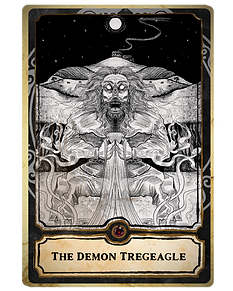
There are few names in Cornwall more feared than Tregeagle. His cry belongs to the moor, the cliff, the sand hill, and the storm. When the Atlantic drives hard against the rocks of the west, and the wind roars over Land’s End, some say it is not only weather that howls there. It is Tregeagle. Fleeing still. Hunted still. Labouring still. Some say he was older than memory. Others say he was a wicked landowner from near Bodmin, a man of wealth, cruelty, and lawless power. As magistrate, he was unjust. As landlord, he was pitiless. As steward, he cheated, forged, stole, and ruined innocent people to hide his crimes. Dark tales gathered around his house. Some said murder stained his hands. Some said even his own blood had suffered under him. At last, death came. Devils waited for him. In terror, Tregeagle gave wealth to the priests and begged them to save his soul. The struggle was fierce. Prayers were spoken, holy powers were called upon, and the devils were driven back. Tregeagle was buried with honour in St Breock Church. For a while, he lay there. But peace would not hold him. After his death, a bitter dispute arose over land near Bodmin. The matter had been tangled by Tregeagle’s own frauds. Deeds had been destroyed. New ones forged. Land sold, leased, and stolen under false right. At the final hearing, when the judge was ready to send the case to the jury, one man rose and said he had one more witness to call. The doors opened. Tregeagle was led into court. The dead man stood in the witness box. A cold silence filled the room. Then the questioning began, and at last the truth came out. Fraud upon fraud was uncovered, and judgement was given to the man who had been wronged. But when the trial ended, Tregeagle did not return to his grave. He remained. Dark spirits waited to seize him, yet holy power held them back. The court trembled, caught between judgement and damnation. The man who had summoned him refused to take him away. So the priests were called. They would not hand him to the devils outright, however black his soul had been. Instead, they gave him labour without end. While he worked, there would remain some faint hope. If he stopped, even for a moment, the devils might claim him. His first task was at Dozmare Pool. He was to empty that dark, bottomless water with a limpet shell. And the shell had a hole in it. So Tregeagle bent over the pool, day and night, summer and winter, dipping water that never lowered, while the devil watched. For years he laboured. Then came a storm that broke the moor open. Lightning coiled around Rough Tor. Fire fell into the lake. Hail struck like stones, and thunder rolled from hill to hill. Still Tregeagle worked. At last, he fled. The demons rushed after him. Three times he ran around the pool. Then he sprang across it. The devils could not cross water, and while they ran around the edge, Tregeagle gained the lead. He fled to Roche Rock and thrust his head through the chapel window, finding sanctuary there. The demons could not take him. But neither could the chapel endure him. His ghastly head filled the holy place. Every prayer burned him like molten iron. His shrieks terrified the worshippers, and the hermit who lived there began to waste away from fear. So the priests moved him again. This time he was taken to the north coast near Padstow. There he was ordered to make trusses of sand and ropes of sand to bind them. He gathered the sand. The tide flattened it. He twisted the ropes. The wind broke them. He began again. His howling troubled Padstow so deeply that the people fled and prayed for deliverance. St Petroc heard them. With prayer, he subdued Tregeagle and forged holy chains, each link sealed with devotion. Bound in those chains, Tregeagle was led south. In those days, Helston was still a port, and ships came up the estuary. Tregeagle was set near the Loo and ordered to carry sacks of sand across the water to Porthleven until the beach was cleared to bare rock. Again the task was hopeless. The sea returned the sand as fast as he moved it. One day, while Tregeagle waded across the estuary with a great sack on his back, a demon tripped him. He fell, and the sand poured out across the harbour mouth. There it remained. And that, the old tale says, is how Loo Bar was made, closing the harbour of old Ella’s Town and ending its prosperity. The people were furious. With priests, prayers, bell, book, and candle, Tregeagle was bound once more and sent far west, where fewer people would hear him and no harbour could be destroyed. There his final labour was set. He must sweep the sands from Porthcurno Cove around Tol Pedn Penwith and into Nanjizal. Anyone who knows that coast knows the cruelty of it. Granite rises in broken masses. The Atlantic strikes with all its strength. The currents return what hands remove. Yet Tregeagle labours still. In calm weather, they say, his low moaning may be heard along the shore. When the wind begins to rise, some call it only weather moving through rock and grass. Others know better. It is Tregeagle, worn by endless work. And when a storm is coming, his roar rises before it. So the old people told the tale. A wicked man may gather land, gold, and power, yet none of it can buy peace when the reckoning comes. A false witness may be called from the grave to speak truth. A sinner may be given labour instead of rest, and hope instead of mercy. Across Cornwall, from Dozmare Pool to Roche Rock, from Padstow sands to Loo Bar, and from Porthleven to the granite cliffs of the far west, the cry of Tregeagle reminds us that some deeds do not die with the body. They echo. They pursue. They become the sound of the storm itself.
